

Travel Tips For People With Dementia
For those with dementia, routine plays a key role in mental and emotional well-being. Even seemingly minor changes in schedule and atmosphere can evoke fear and uncertainty, causing challenging or dangerous behaviors. While non-essential travel is discouraged for individuals with mid- to late-stage dementia, the following precautions can help reduce the risk to your loved one’s safety and mitigate common behavioral challenges.
In Advance of Travel
- There is no blanket approach to informing your loved one about an upcoming trip. For some people with dementia, the idea of travel can create excitement, for others, it may create anxiety. In most cases, there’s no real need to inform your loved one in advance, so trust your personal judgment as to if, when, and/or how to tell them. As their primary caregiver, you know best how your loved one is likely to respond and your capacity to deal with their response.
- Schedule travel around your loved one’s “best” time of day – likely morning, following a good night’s sleep.
- Minimize the duration of the commute, avoiding heavy traffic on the road and making as few flight changes as possible. If you must change planes, make sure to have adequate time during the layover to change gates.
- Make sure your loved one is never without identification and your contact information. Multiple means of identification is ideal (ex. ID bracelet and written information in their wallet or pocket.) Utilize a GPS tracker (ex. Apple AirTag) if possible.
- Set realistic expectations for those you will spend time with.
- Inform them of your loved one’s special needs and preferences.
- Share copies of “Welcome to Planet Alzheimer’s” and the “Caregivers Ten Commandments,” which are very easy, quick reads and offer excellent tips.
- Emphasize the need for calm, quiet environments and regularly scheduled breaks.
- Encourage dementia-friendly interactions with your loved one. (Ex. Introduce yourself before each interaction; approach your loved one from the front not the side or behind; avoid open-ended questions and use easy one or two-option choices; speak slowly and clearly; give simple step-by-step instructions when necessary, etc.)
- If use of handicap or family restrooms would make your travel easier, make a schedule for periodic stops along the way. Many newer state rest areas and large truck stop chains (Flying J, Travel Center of America, Wilco, Love’s, etc.) offer family restrooms, and you can download apps like “Flush” or “Squat or Not” to find other good options.
While in Transit
- Carry a travel bag with the following and make sure you have easy access to it at all times:
- Your name and contact information and that of one or more emergency contacts
- A detailed travel itinerary, including all scheduled legs of the trip, accommodations and local contacts where possible
- A list of relevant medical conditions and all medications for both you and your loved one
- Copies of your insurance cards and the medical power of attorney for your loved one
- Snacks, sanitizer/wipes, water, travel pillow, sweater/cardigan/blanket, noise-canceling headphones, pain reliever, and spare undergarments/change of clothes in case of an accident.
- Take extra care to ensure your loved one stays hydrated and is offered regular snacks and drinks.
- If flying, notify the airline in advance and request use of a wheelchair from the time you arrive until you leave the (If your loved one won’t use the chair, ask them to assist as you ride in it.)
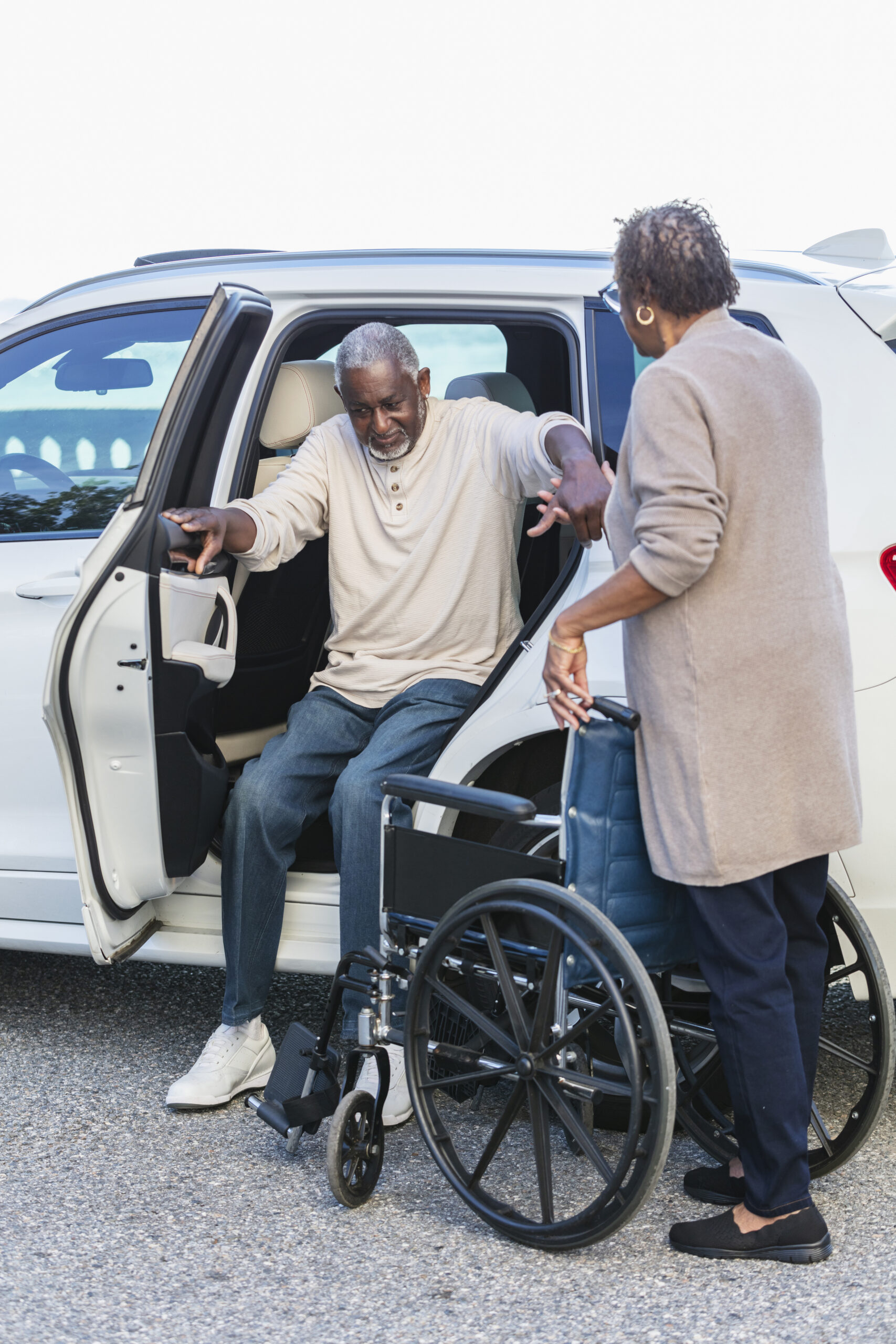
- If driving, try to have your loved one ride in the back seat, with the child safety locks engaged to minimize the risk of opening the door at traffic lights. This happens far more than most realize!
- Offer frequent restroom breaks, taking advantage of the availability of family restrooms at airports or large travel centers en route.
- Don’t worry about what others may think of your loved one’s actions. Instead, focus your energy on the atmosphere created by your own attitude and actions. Your loved one’s behavior and mood will likely reflect yours. Allow yourself ample time, try to remain flexible, unruffled, upbeat, and do your best to project feelings of calm and confidence. If needed, fake it until you make it!
During the Trip
- Be extra vigilant regarding your loved one’s non-verbal cues. A new environment comes with many distractions that may make it even more difficult than usual for your loved one to express their needs and feelings. Changes in routine and unfamiliar faces can create uncertainty and fear, which may cause your loved one to withdraw, become irritable, cry or exhibit other challenging behaviors.
- Each morning, take a full length photo of your loved one in the clothing they’ll wear for the day. Wandering is a big risk in unfamiliar surroundings, and a current photo can be an invaluable asset when searching for someone who’s lost.
- Stick to your regular schedule for meals and sleep as much as possible.
- Schedule several breaks during each day, allowing your loved one plenty of time to sleep or rest in a calm, relaxing environment.
- Try to remain patient if your loved one is more attached/clingy than usual. For someone with dementia, their primary caregiver is an anchor – a source of safety and comfort – and that anchor is especially vital when in an unfamiliar environment.
- Avoid situations that can become over-stimulating to someone with dementia. Crowded restaurants, noisy events, flashing lights, and other environments with lots of activity can create extreme stress, leading to irritation exhibited by anger, crying, or elopement.
- Keep in mind the increased possibility of bowel problems due to changes in diet and routine. Discomfort from constipation is often difficult to verbalize and is often exhibited by irritability.
- At night, place a chair or heavy luggage in front of the door to keep your loved one from leaving the room unnoticed.
- Leave the bathroom light on or use a nightlight to help orient your loved one towards the restroom in the dark.