

Tips and Tricks for Medication Compliance
A common struggle for many dementia caregivers is getting their loved one to take medications. The following tips and tricks may make the process easier. Be sure to consult with your loved one’s physician and/or pharmacist before stopping or changing any medication.
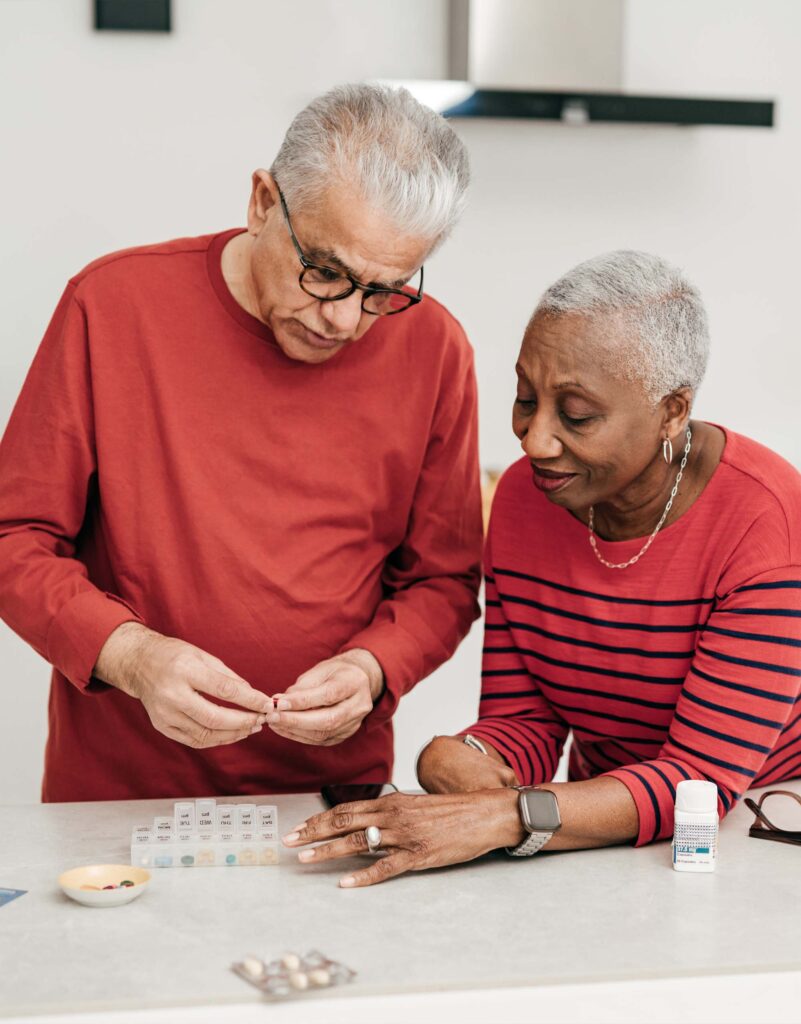
- Start with a calm environment, with minimal sounds and few distractions.
- Try to hide any stress you may be feeling so your loved one doesn’t pick up on or mirror your frustration or anxiety.
- Take a few deep breaths and try to focus the conversation on something positive and enjoyable for you both before asking your loved one to take their medication.
- Try to identify and address potential reasons your loved one may be averse to taking their medication: Do they understand what it’s for? Does it taste unpleasant? Does a sore throat make it hard to swallow? Does it create a side effect you’re unaware of?
- Talk to your pharmacist about potential alternative ways to administer meds (ex. Cutting large pills in half; using liquid formula if available; grinding pills up and mixing them into food,eat with applesauce or pudding) If the medication may be crushed, mix it into something very sweet that doesn’t have a super smooth texture, like ice cream or jam.
- Create a positive routine for taking medicine at the same time and in the same place every day. Ex:
- Take it with the first sip of morning coffee, with a bite of something sweet in the evening or while they’re reading the newspaper.
- Place their medicine in a “special” container or on a colorful dish.
- Ask your loved one to be part of the process by getting their cup or pouring their beverage.
- Talk with your doctor and/or pharmacist to see if one of these options may be appropriate:
- Thoroughly review all medications prescribed to your loved one and eliminate those not absolutely necessary or vital to quality of life.
- Take medications at the time of day when your loved one is most compliant and receptive to instructions.
- Understand any potential side effects which may be causing your loved one discomfort that they can’t clearly express.
- Provide very short, clear instructions and demonstrate how to take If necessary, add a final step of opening the mouth and moving the tongue around to show it’s been taken.
- Use the influence of someone your loved one trusts and respects to encourage your loved one to take their medication. A letter from the doctor, a short video from their clergy member, or a note from another family member may reassure them and reinforce the importance of taking their medicine.
- Seeing a lot of pill bottles can seem intimidating or daunting, so prepare daily meds out of sight from your loved If they have to take multiple pills, present them one at a time, and consider “taking” an M&M or other treat between pills.
- Make ‘medicine time’ a group activity: take vitamins or other medication at the same time as your loved one to make it less intimidating. Incorporate a silly song, saying or the chorus of an old favorite song to make it fun. (Ex. Witch Doctor; Staying Alive; Doctor, Doctor; Spoonful of Sugar, etc.)
- Try not to allow medication time to escalate into a struggle or a fight that no one will win. If you see yourself or your loved one start to get frustrated or angry, take a step back, change the subject or distract them, then try again in 10-15 minutes when you’re both feeling calm.
Additional Information / Resources
Videos
- https://www.youtube.com/watch?v=EqKnL7V8B0M (Teepa Snow)
- https://www.uclahealth.org/dementia/refusal-to-take-medications (UCLA Health)
Podcast
- https://www.youtube.com/watch?v=Inb7t6ogO2s (Dementia Care Partner with Teepa Snow: Medication and Dementia)